


In today’s global business environment, ESG—Environmental, Social, and Governance—is no longer a voluntary initiative. It is a core business requirement driven by regulators, investors, and international buyers.
For textile and manufacturing industries, ESG represents a comprehensive framework covering environmental performance, social responsibility, and governance transparency.
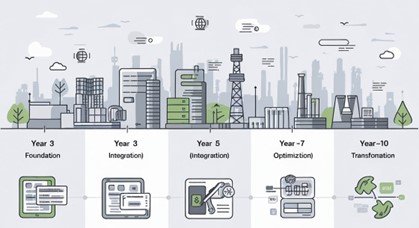
A future-ready sustainability roadmap transforms ESG from a concept into a practical, measurable, and time-bound strategy, guiding organizations over the next 3 to 10 years.
What is ESG Strategy & Sustainability Roadmap?
ESG Strategy
An ESG strategy defines how an organization manages:
- Environmental impact (energy, water, emissions, waste)
- Social responsibility (labor, safety, community)
- Governance (policies, ethics, compliance systems)
Sustainability Roadmap
A sustainability roadmap is a structured implementation plan that answers:
- What actions will be taken
- When they will be completed
- Who is responsible
- How success will be measured (KPIs)
Why ESG Strategy is Essential Today
ESG has become a baseline requirement across global supply chains.
Key Drivers
- Regulatory requirements
- Buyer and brand expectations
- Investor decision-making
- Market competition
Business Reality
- Companies without ESG strategies risk losing market access
- Investors increasingly require verified ESG performance
- Buyers demand data-driven sustainability transparency
Who Needs an ESG Strategy?
Organizations in Scope
- Textile manufacturers and exporters
- Apparel brands and retailers
- Fabric and raw material suppliers
- Mid-sized and large enterprises
- Companies seeking investment or financing
Global ESG Regulatory Landscape
ESG is driven by multiple global frameworks and regulations.
European Union (Leader)
- CSRD (Corporate Sustainability Reporting Directive)
- ESPR (Ecodesign Regulation)
- Digital Product Passport (DPP)
- Extended Producer Responsibility (EPR)
United States
- SEC Climate Disclosure (Scope 1 & 2)
- California Scope 3 and supply chain requirements
Asia & Global Supply Chains
- Bangladesh, India, Vietnam
- Increasing ESG requirements for export markets
ESG Timeline — Why Immediate Action is Required
Key Milestones
- 2024–2025 — CSRD reporting begins
- 2026 onward — Expansion to SMEs and non-EU exporters
- 2030 targets — Major emission reduction milestones
Strategic Insight
Companies building ESG systems in 2025–2026 gain:
- First-mover advantage
- Stronger buyer positioning
- Lower compliance risk
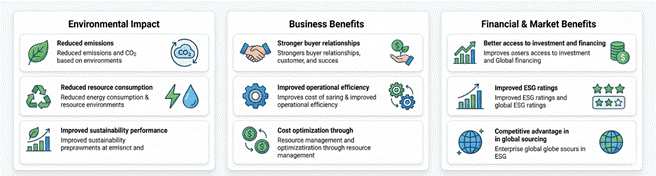
Why ESG Strategy Matters for Your Business
How to Build an ESG Strategy & Roadmap
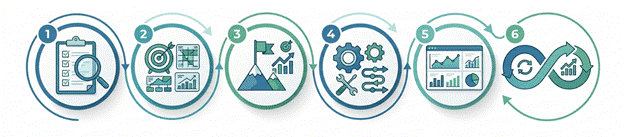
A structured approach ensures effective implementation.
| 1 | Baseline Assessment Evaluate current environmental and social performance. Identify compliance gaps. |
| 2 | Materiality Analysis Identify key ESG risks and opportunities. Prioritize high-impact areas. |
| 3 | Target Setting Define measurable goals (e.g., emissions reduction, water efficiency). Align with global frameworks such as SBTi. |
| 4 | Implementation Plan Define actions, timelines, and responsibilities. Allocate resources and budget. |
| 5 | Monitoring & Reporting Track performance using digital systems. Align with ESG reporting frameworks. |
| 6 | Continuous Improvement Update strategy based on performance and regulations. Drive innovation and long-term sustainability. |
Key Challenges in ESG Strategy Implementation
- Lack of reliable data
- Limited internal expertise
- Complex regulatory requirements
- Supplier engagement challenges
- Integration across departments
These challenges require structured planning and expert support.
How SATIC Supports ESG Strategy & Roadmap Development
SATIC provides end-to-end ESG strategy development and implementation support, aligned with global standards and industry best practices.
Our Key Services
- ESG Readiness & Gap Assessment
- Materiality Analysis & Risk Mapping
- ESG Strategy & Roadmap Development
- Net-Zero & Decarbonization Alignment
- ESG Data Systems & Monitoring
- Multi-Framework Reporting Integration
- Supply Chain ESG Engagement
- Training & Capacity Building
Why Leading Companies Invest in ESG Strategy
- Strong compliance readiness
- Improved investor confidence
- Better buyer relationships
- Long-term sustainable growth
- Competitive advantage in global markets
| Ready to Build Your ESG Strategy? ESG Strategy DevelopmentSustainability Roadmap DesignNet-Zero AlignmentESG Data & Reporting SystemsTraining & Implementation Support |
Strategic Advice — Image & Data Placement
| Section | Visual Type | Purpose |
| Introduction | ESG roadmap timeline | Engagement |
| Drivers | Infographic | Awareness |
| Global Landscape | Map | Clarity |
| Timeline | Roadmap chart | Urgency |
| Framework | Step diagram | Action |
| SATIC Services | Lifecycle diagram | Conversion |