


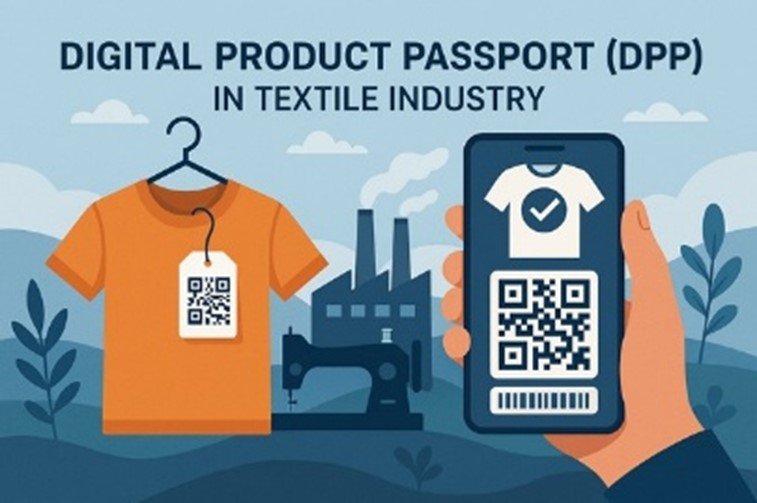
Global supply chains are rapidly moving toward full transparency and traceability. Brands, regulators, and consumers now demand detailed information about how products are made, what materials are used, and their environmental impact.
The Digital Product Passport (DPP), introduced under the EU’s Ecodesign framework, is set to transform how products are tracked, reported, and verified across their lifecycle.
For textile and apparel manufacturers, DPP is not just a regulatory requirement—it is a strategic opportunity to build trust, improve compliance, and gain competitive advantage.
What is Digital Product Passport (DPP)?
Digital Product Passport (DPP) is a digital record that stores product-level data across its entire lifecycle. This data is typically accessed through QR codes, digital links, or cloud-based platforms.
Key Information Stored in DPP
- Raw materials and composition
- Manufacturing process details
- Environmental impact (carbon, water, chemicals)
- Certifications and compliance status
- Product lifecycle and end-of-life information
What is Traceability?
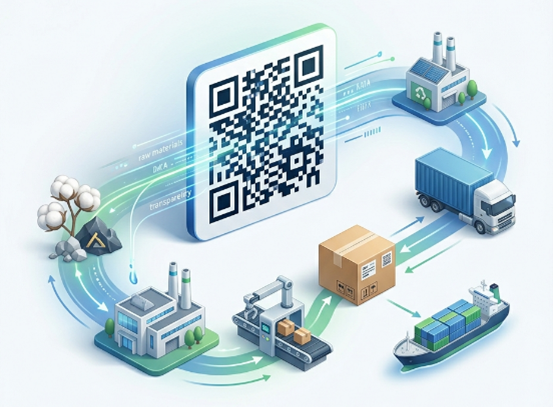
Traceability ensures that every product can be tracked across:
- Raw material sourcing
- Production stages
- Logistics and distribution
- End-of-life handling
DPP = Digital Data. Traceability = Supply Chain Visibility. Together, they create full transparency and accountability.
Who Needs to Comply with DPP?
Any company placing textile or footwear products in the EU market must comply with DPP requirements.
Affected Stakeholders
- Textile and garment manufacturers
- Raw material suppliers
- Brands and retailers
- Logistics and distribution partners
- Certification and compliance bodies
Global Impact
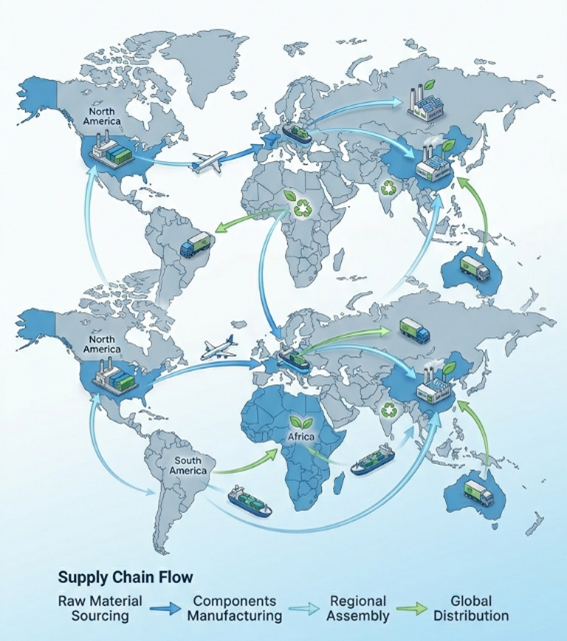
Although DPP originates in the EU, it affects global exporters, including Bangladesh, India, Vietnam, Turkey, and China. If your buyer is in the EU—you are in scope.
DPP Regulatory Timeline (Textile Industry)
The DPP rollout is structured under the EU’s Ecodesign for Sustainable Products Regulation (ESPR).
Key Milestones
- July 2024 — ESPR enters into force — DPP framework established
- April 2025 — ESPR Working Plan 2025–2030 adopted — textiles prioritized
- Late 2026 / Early 2027 — Delegated Act expected — detailed textile requirements
- Mid-2028 — Full mandatory compliance
Why DPP & Traceability Matter
DPP is not just compliance—it is transforming how businesses operate.
Environmental Impact
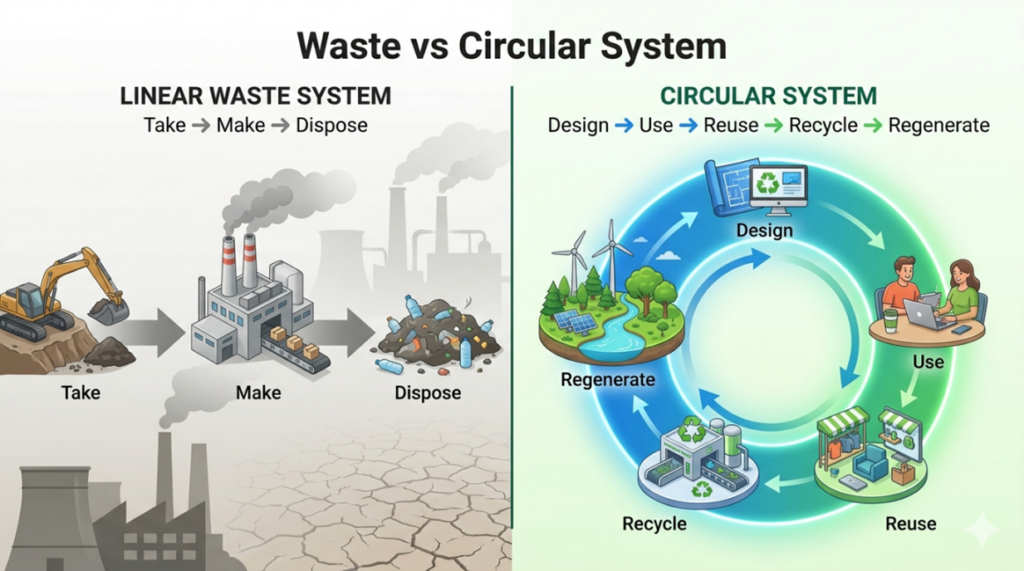
- Supports circular economy and recycling
- Reduces waste and resource loss
- Enables better lifecycle management
Business Benefits
- Increased buyer trust and transparency
- Stronger brand credibility
- Improved ESG performance
- Better supply chain control
- Competitive advantage in global markets
Market Drivers
- EU Green Deal & Circular Economy Action Plan
- Increasing consumer demand for transparency
- Investor focus on ESG performance
- Regulatory enforcement
The Industry Challenge
Currently approximately 5 million tons of clothing are discarded annually in the EU. Less than 1% is recycled into new fiber.
DPP aims to address this gap by enabling:
- Product traceability
- Recycling and reuse systems
- Circular product design
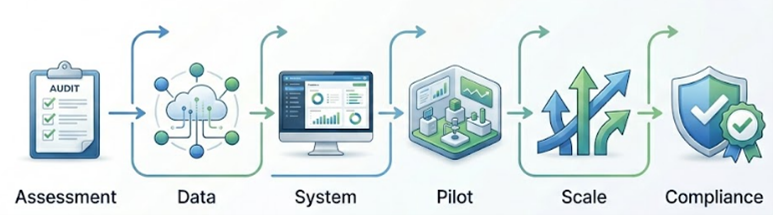
How to Prepare for DPP — Practical Roadmap
Preparation must start now to avoid compliance risk.
| 1 | Data Audit Assess current ESG and product data availability. Identify gaps in supply chain information. |
| 2 | Supplier Mapping Map upstream suppliers. Collect material and process data. (Usually requires 6–12 months) |
| 3 | System Integration Align ERP / PLM systems with DPP structure. Implement digital traceability tools. |
| 4 | Pilot Implementation Start with selected products or facilities. Test data flow and reporting. |
| 5 | Product Design Alignment Integrate sustainability into design. Focus on durability, recyclability, and materials. |
| 6 | Scale & Compliance Expand across full product range. Ensure readiness before 2028 deadline. |
Key Challenges in DPP Implementation
- Lack of supply chain data
- Limited digital infrastructure
- Supplier engagement difficulties
- Data standardization issues
- High initial system investment
These challenges require structured planning and expert support.
How SATIC Supports DPP & Traceability
SATIC provides end-to-end Digital Product Passport and traceability solutions, aligned with EU regulations and global best practices.
Our Key Services
- DPP Readiness Assessment
- Supply Chain Mapping & Data Collection
- ESG & Product Data Integration
- Traceability System Design
- ERP / PLM Integration Support
- Circular Product Strategy Development
- ESG & Compliance Reporting
- Training & Capacity Building
Why Early Adoption Creates Advantage
- First-mover advantage in EU markets
- Stronger buyer relationships
- Reduced compliance risk
- Faster market access
- Improved ESG positioning
Transparency is becoming a requirement—not a premium feature.
| Ready to Prepare for Digital Product Passport? DPP Readiness & Gap AssessmentSupply Chain Traceability SystemESG Data IntegrationCompliance Strategy for EU MarketTraining & Digital Transformation Support |
Strategic Advice — Image & Data Placement
| Section | Visual Type | Purpose |
| Introduction | QR + product journey | Engagement |
| Definition | Data flow diagram | Clarity |
| Timeline | Roadmap chart | Urgency |
| Benefits | Infographic | Value |
| Challenges | Problem icons | Awareness |
| Implementation | Flow diagram | Action |
| SATIC Services | Lifecycle diagram | Conversion |