


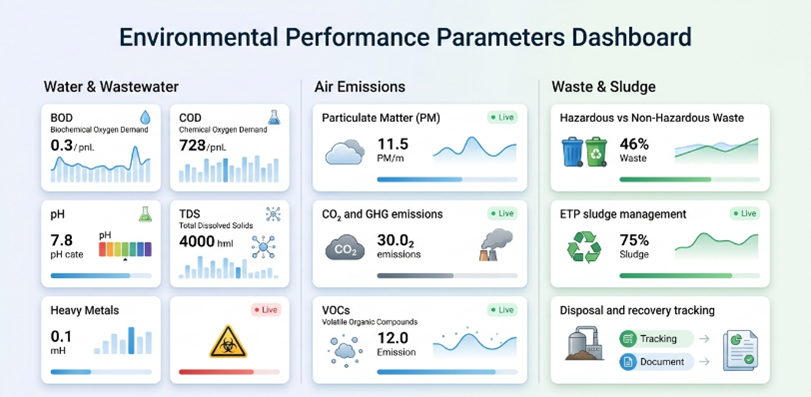
In today’s regulatory environment, environmental compliance is no longer based on declarations—it is based on data, testing, and verified evidence.
For textile and manufacturing industries, environmental testing, monitoring, and compliance reporting are essential to ensure that emissions to water, air, and land meet regulatory and buyer requirements.
Organizations that establish strong environmental monitoring systems not only reduce risk—but also strengthen ESG performance, buyer confidence, and long-term sustainability.
What is Environmental Testing & Monitoring?
Environmental Testing
Environmental testing involves measuring pollutants and parameters released from industrial operations into:
- Water (effluent discharge)
- Air (emissions and particulates)
- Soil (contamination and waste disposal impact)
Environmental Monitoring
Monitoring is the continuous tracking and recording of environmental performance over time. It includes:
- Routine sampling and testing
- Real-time monitoring systems
- Trend analysis and performance tracking
Compliance Reporting
Compliance reporting transforms environmental data into:
- Regulatory reports
- Buyer and audit documentation
- ESG disclosures
- Certification and compliance submissions
Who Needs Environmental Compliance Systems?
Environmental testing and monitoring are mandatory for industries with environmental impact.
Key Sectors
- Textile and garment manufacturing
- Dyeing, washing, and wet processing units
- Chemical and processing industries
- Heavy manufacturing and engineering
Key Stakeholders
- Factory management and operations teams
- Sustainability and ESG teams
- Compliance and audit teams
- Chemical and wastewater management teams
- Buyers, regulators, and certification bodies
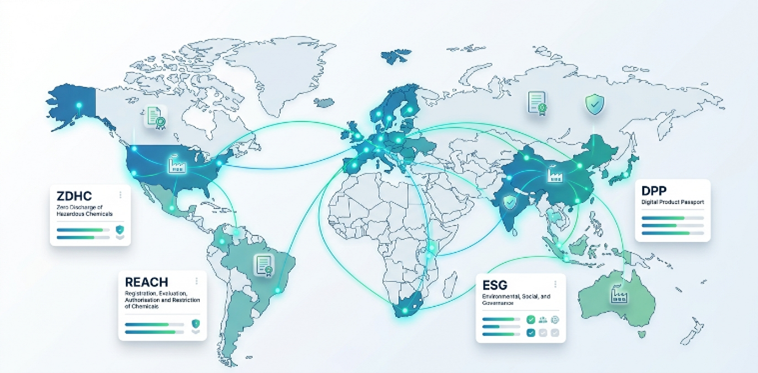
Global Regulatory Landscape
Environmental compliance is driven by both local regulations and international buyer expectations.
Key Regulatory Drivers
- European Union — ESPR (Ecodesign Regulation), REACH chemical restrictions, Green Claims Directive (enforcement from 2026)
- United States — State-level environmental regulations, Scope 1 & 2 emissions reporting (from 2026)
- Bangladesh — Department of Environment (DoE) discharge standards, Environmental Conservation Rules (updated 2023)
Industry Frameworks
- ZDHC Wastewater Guidelines
- ESG reporting frameworks
- Buyer-specific environmental requirements
When Should Companies Take Action?
Immediate Action Required. Regulatory timelines are tightening globally:
- 2026 — Major enforcement of chemical and environmental regulations
- 2026–2027 — Emission reporting and compliance expansion
- Ongoing — Buyer-driven compliance audits
Why Early Action Matters
- Avoid costly system upgrades later
- Reduce audit risks
- Ensure continuous compliance
- Maintain market access
Key Environmental Parameters to Monitor
Water & Wastewater
- BOD (Biochemical Oxygen Demand)
- COD (Chemical Oxygen Demand)
- pH
- TDS (Total Dissolved Solids)
- Heavy metals
Air Emissions
- Particulate matter (PM)
- CO₂ and GHG emissions
- VOCs (Volatile Organic Compounds)
Waste & Sludge
- Hazardous vs non-hazardous waste
- ETP sludge management
- Disposal and recovery tracking
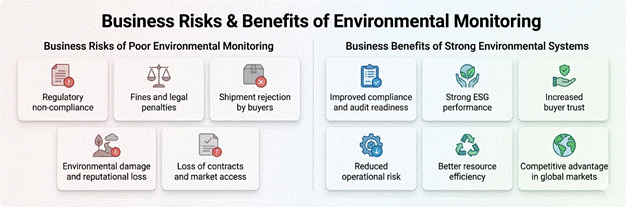
Business Risks & Benefits
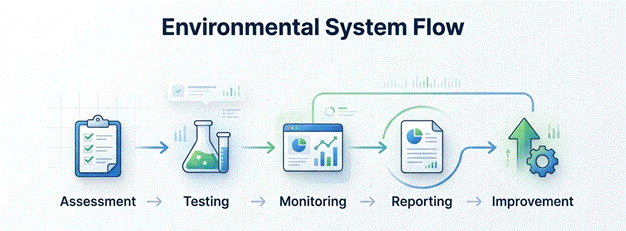
How to Implement an Effective Environmental Compliance System
| 1 | Environmental Baseline Assessment Identify all emission sources. Evaluate current compliance status. |
| 2 | Chemical & Process Review Align with ZDHC MRSL. Optimize chemical usage. |
| 3 | Testing & Monitoring System Establish routine testing schedule.Install monitoring systems (manual or automated). |
| 4 | Data Management System Collect and store environmental data. Enable real-time tracking. |
| 5 | Reporting & Verification Prepare regulatory and ESG reports. Engage third-party verification. |
| 6 | Continuous Improvement Analyze trends. Optimize processes and performance. |
Bangladesh Context — Why This is Critical
Bangladesh’s textile industry uses extremely high volumes of water, faces strict buyer wastewater requirements, and is under increasing global regulatory pressure.
Recent trends show:
- Rapid growth in green factories (LEED certification)
- Increasing demand for verified environmental data
- Buyer preference for compliant and transparent suppliers
Environmental performance is now becoming a market entry requirement—not an advantage.
How SATIC Supports Environmental Testing & Compliance
SATIC provides end-to-end environmental testing, monitoring, and compliance solutions, aligned with local regulations and global standards.
Our Key Services
- Environmental Testing (Water, Air, Soil)
- Wastewater & ETP Performance Assessment
- Environmental Monitoring System Design
- ZDHC Wastewater Compliance Support
- ESG Data Collection & Reporting
- Regulatory Compliance Support (DoE, international)
- Third-Party Audit Preparation
- Training & Capacity Development
Why Leading Companies Invest in Environmental Monitoring
- Reliable compliance
- Strong ESG performance
- Buyer confidence and trust
- Reduced operational risk
- Sustainable long-term growth
| Ready to Strengthen Your Environmental Compliance? Environmental Compliance AssessmentTesting & Monitoring SystemsZDHC & Wastewater ComplianceESG & Regulatory ReportingAudit & Certification Readiness |
Strategic Advice — Image & Data Placement
| Section | Visual Type | Purpose |
| Introduction | Monitoring dashboard | Engagement |
| Parameters | Data charts | Technical clarity |
| Compliance | Global map | Awareness |
| Risks | Comparison chart | Decision trigger |
| Implementation | Flow diagram | Action |
| SATIC Services | Lifecycle diagram | Conversion |