


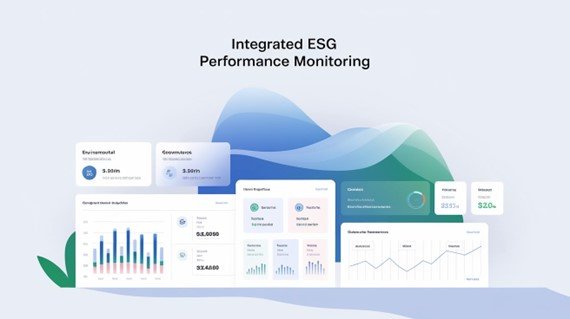
Global supply chains are rapidly shifting from voluntary sustainability claims to mandatory, data-driven ESG disclosures.
For textile and manufacturing industries, ESG reporting is no longer a branding exercise—it is a regulatory requirement, buyer expectation, and investor decision factor.
Organizations that fail to establish structured ESG reporting systems risk compliance penalties, loss of buyers, and restricted market access.
What is ESG Reporting?
ESG Reporting is the structured disclosure of data related to Environmental performance, Social responsibility, and Governance practices. This information is shared with regulators, investors, buyers and brands, and certification bodies.
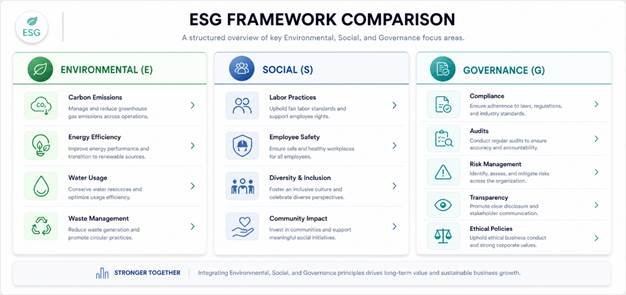
Key ESG Data Areas
- Greenhouse gas emissions (Scope 1, 2, 3)
- Energy, water, and waste performance
- Chemical management and environmental impact
- Labor practices and worker welfare
- Governance, policies, and risk management
The Global ESG Reporting Challenge
There is no single global ESG standard—companies must comply with multiple frameworks simultaneously.
Major Global Frameworks
- European Union — CSRD (Corporate Sustainability Reporting Directive), Double Materiality approach
- United States — SEC Climate Disclosure Rules
- United Kingdom — FCA ESG disclosure requirements
- Asia & Global — TCFD (Task Force on Climate-related Financial Disclosures), GRI (Global Reporting Initiative), SASB (Sustainability Accounting Standards Board)
The Core Challenge
Companies must report the same data, in different formats, across multiple jurisdictions.
The Solution — Framework Interoperability
Collect data once → Use it across multiple reporting standards
Who Needs ESG Reporting?
ESG disclosure is now mandatory or expected for a wide range of organizations.
Key Entities
- Large EU companies (EUR 450M+ revenue)
- Mid-sized exporters supplying EU and US markets
- Textile manufacturers in Bangladesh, India, Vietnam
- Financial institutions and investors
- Global brands and sourcing companies
Key Insight: If you export to global markets—you must report ESG.

Regulatory Landscape & Requirements
Different regions focus on different ESG priorities.
Key Differences
- EU (CSRD) — Broad ESG scope including emissions, water, waste, and supply chain impact
- US (SEC) — Focus on climate risk and emissions (Scope 1 & 2)
- UK / Asia (TCFD) — Focus on climate risk, governance, and financial disclosure
Key Requirements
- Third-party verified data
- Consistent and auditable reporting
- Transparent and comparable disclosures
ESG Reporting Timeline — Why Action is Urgent
Key Milestones
- 2025 — CSRD Phase 1 reporting begins (based on 2024 data)
- 2026 — Expanded reporting scope (mid-sized companies)
- 2026–2027 — California and global climate disclosure enforcement
- 2026+ — Integration with Digital Product Passport (DPP)
Critical Insight: The preparation window is already open. Companies must start now to avoid compliance risk.
Business Risks & Benefits
Business Risks of Poor ESG Reporting
- Inconsistent or inaccurate data
- Regulatory fines and penalties
- Audit findings and non-compliance
- Loss of buyer confidence
- Reduced access to financing
Business Benefits of Structured ESG Reporting
- 40–50% reduction in reporting effort
- Improved data accuracy and consistency
- Faster response to investors and buyers
- Stronger ESG ratings
- Competitive advantage in procurement
- Better access to green financing
How to Implement ESG Reporting — Practical Approach
| 1 | ESG Disclosure Audit Identify applicable frameworks (CSRD, SEC, GRI, etc.). Map reporting requirements. |
| 2 | Data Consolidation Collect ESG data across departments. Create a centralized data system. |
| 3 | Platform Selection Use ESG software platforms such as: Workiva, Microsoft Sustainability Manager. |
| 4 | Framework Mapping Align data with multiple frameworks. Enable automated reporting. |
| 5 | Assurance & Verification Establish internal review processes. Engage third-party verification. |
| 6 | Reporting & Continuous Update Publish ESG reports. Update quarterly or annually. |
Typical Investment & ROI
Implementation Cost: EUR 200,000 – 600,000 (depending on scale and complexity)
Expected Returns
- Reduced compliance labor
- Lower audit cost
- Improved data accuracy
- Faster reporting cycles
- Increased investor confidence
Key Challenges in ESG Reporting
- Fragmented data systems
- Lack of internal expertise
- Supplier data gaps
- Multiple framework complexity
- High initial setup effort
How SATIC Supports ESG Reporting & Disclosure
SATIC provides end-to-end ESG reporting and global disclosure solutions, aligned with international frameworks and regulatory requirements.
Our Key Services
- ESG Readiness & Gap Assessment
- ESG Data Collection & System Design
- Multi-Framework Reporting (CSRD, GRI, TCFD, etc.)
- ESG Automation & Dashboard Development
- Third-Party Verification Support
- Integration with DPP & Supply Chain Data
- Training & Capacity Building
Why Leading Companies Invest in ESG Systems
- Strong compliance readiness
- Improved investor confidence
- Better buyer relationships
- Competitive advantage in global markets
- Long-term sustainable growth
| Ready to Build a Global ESG Reporting System? ESG Reporting ReadinessMulti-Framework ComplianceESG Data AutomationInvestor-Ready DisclosureTraining & Implementation Support |
Strategic Advice — Image & Data Placement
| Section | Visual Type | Purpose |
| Introduction | ESG dashboard | Engagement |
| Frameworks | Mapping diagram | Clarity |
| Timeline | Roadmap chart | Urgency |
| Benefits | Infographic | Value |
| Workflow | Process diagram | Action |
| SATIC Services | Lifecycle diagram | Conversion |